"The Earth is a very small stage in a vast cosmic arena." Carl Sagan
Outreach
I love sharing my passion and knowledge of astronomy with the public. I have volunteered at hundreds of star parties and local science events. My hope is to pay it forward and inspire people to reflect on our place in the universe and how we treat each other and planet Earth (see my astronomy origin story). I have also been the science advisor for several art projects and a Sci-Fi book. I’m very interested in future consultant projects. I’m also very active on social media. Please reach out!
Ask an Astronomer
Do you have a question about Astronomy? The Cornell Ask an Astronomer page can help! Go here to ask your question and see FAQ: http://curious.astro.cornell.edu/
Art
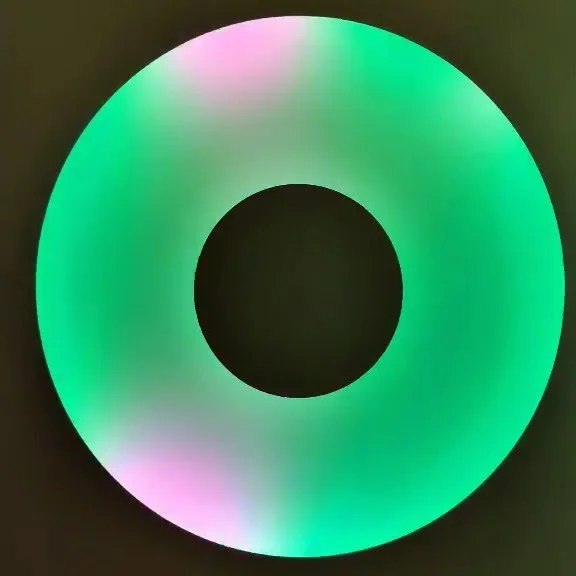
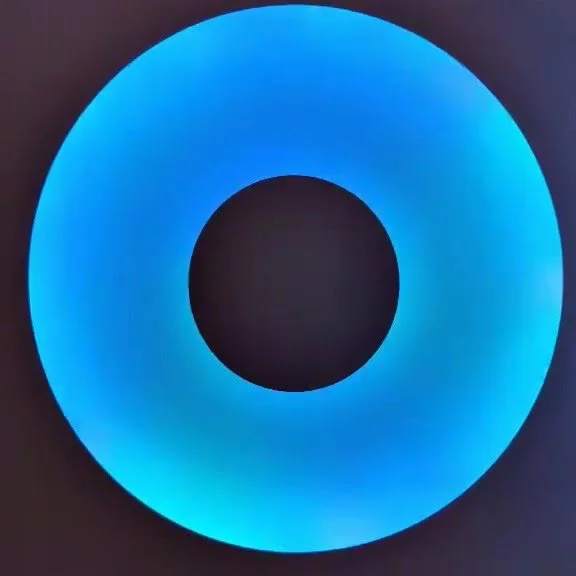
I was a science advisor for the Exoplanet Light Experience during the Blended Worlds Exhibition at the Brand Library & Art Center in Glendale, CA from Sep. 21, 2024 Jan 4, 2025.
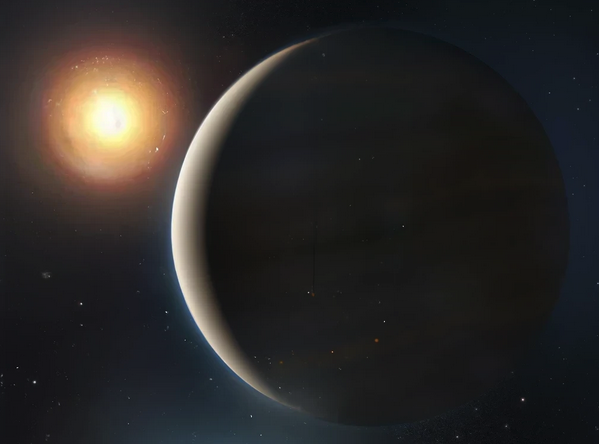
Geomagnetic Sunsets On K2-18 b
As the red dwarf star disappears into the horizon, the sky is illuminated not just by the deep reds and purples of the fading light, but also by the vibrant aurorae that dance across the atmosphere of an alien world.
This experiment reimagines our experience of sunsets on Earth, by exploring sunsets on exoplanet K2-18 b, where the intense stellar activity creates a geomagnetic sunset. This surreal interplay of color invites the viewer to contemplate beauty beyond our Earth-based experiences.
-- Lead Investigator: Chrissy Stevens, JPL Visual Strategist
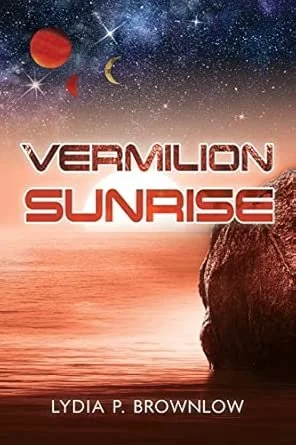
I was a science advisor for the Vermilion Sunrise Sci-Fi book by Lydia P. Brownlow
Winner, Young Adult Category, The Kindle Book Awards Reader's Choice Contest, 2024
Silver Medal, Young Adult Fiction, Reader Views Reviewer's Choice Awards, 2024
Honorable Mention, YA Adventure Novels, Readers' Favorite International Book Awards, 2024
Seventeen-year-old Leigh awakens from cryosleep to discover she's part of the first human colony in another solar system. The cryosleep is flawed. It kills adults and causes partial amnesia. As a result, the nations of Earth have launched into space an unlikely group--teenagers with no memory of volunteering for the mission…
Cornell University
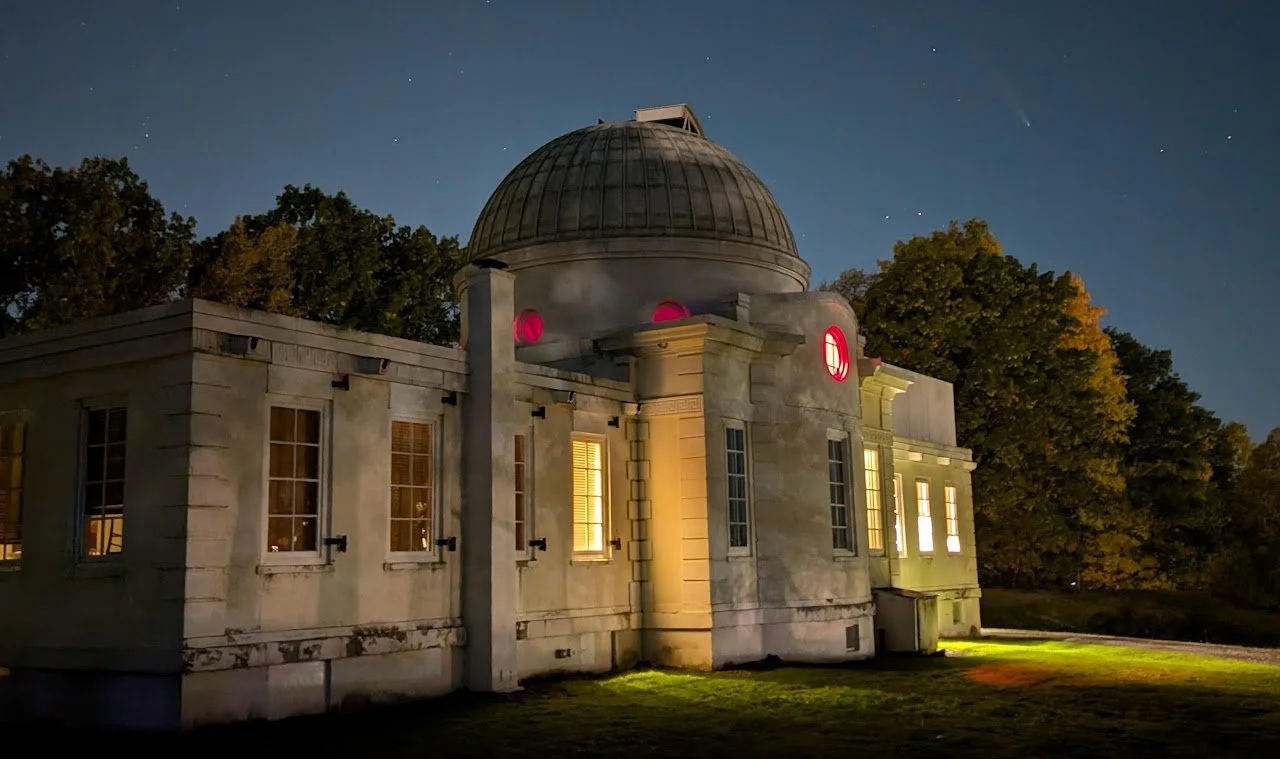
Interested in stargazing in Ithaca? The Cornell Astronomical Society (CAS) conducts public viewing nights at Cornell University's Fuertes Observatory every Friday at 8pm (weather permitting). I volunteer here most weekends in the spring and summer.
Carl Sagan Institute
Follow along on our journey as we search for life in the universe. You can find us on our website and on social media (Facebook, Twitter, Instagram, Youtube, BlueSky). Some of our videos can be found here.
We have hosted live events, live Q&As, Youtube campaigns, and so much more. I spearheaded our Science of Cosmos Campaign and co-organized Carl Sagan’s 90th Birthday and the 30th Anniversary of the Pale Blue Dot image.
Since 2018, I have been the social media team leader. Under my tenure, our engagement and following has increased drastically.
Carl Sagan's Pale Blue Dot - 30 Years On
Live Q&A with Carl Sagan Institute researchers
Carl Sagan's 1994 "Lost" Lecture: The Age of Exploration
In our Science of Cosmos Campaign, Carl Sagan Institute Fellows (professors, post-docs, and graduate students) discuss the science behind National Geographic's new series 'Cosmos: Possible Worlds'. We produced 5 videos for the campaign and we had ten of thousands of views on YouTube and millions of impressions on our Twitter threads from all around the world.
Astro on Tap talk given by CSI researcher Gillis Lowry
Prof. Lisa Kaltenegger, Prof. James Cordes, and Dr. Mark Sarvary discuss 'The Man of a Trillion Worlds'.
Dr. Ryan MacDonald, Dr. Jake Turner, and Thea Kozakis discuss how quantum mechanics enables discoveries in Astronomy.
Prof. Jonathan Lunine, Prof. Alexander Hayes, and Dr. Maryame El Moutamid discuss the legacy of the Cassini mission to Saturn.
Dr. Mark Sarvary, Prof. Ruth Richardson, and Prof. Steve Winans discuss microbiology and what it means to be human.
Dr. Buz Barstow, Morgan Irons, and Dr. Hunter Adams discuss how future technology can restore the Earth and enable voyages to other worlds.
Environmental Activism
I am a member of the Alliance of World Scientists (AWS) and I am a Signatory on the World scientists’ warning of a climate emergency. Current number of signatories: 15,831 from 167 countries!
World Scientists’ Warning of a Climate Emergency
(Condensed Version)
William J. Ripple, Christopher Wolf, Thomas M. Newsome, Phoebe Barnard, William R. Moomaw
We scientists have a moral obligation to clearly warn humanity of any catastrophic threat. In this paper, we present a suite of graphical vital signs of climate change over the last 40 years. Results show greenhouse gas emissions are still rising, with increasingly damaging effects. With few exceptions, we are largely failing to address this predicament. The climate crisis has arrived and is accelerating faster than many scientists expected. It is more severe than anticipated, threatening natural ecosystems and the fate of humanity. We suggest six critical and interrelated steps that governments and the rest of humanity can take to lessen the worst effects of climate change, covering 1) Energy, 2) Short-lived pollutants, 3) Nature, 4) Food, 5) Economy, and 6) Population. Mitigating and adapting to climate change entails transformations in the ways we govern, manage, feed, and fulfill material and energy requirements. We are encouraged by a recent global surge of concern. Governmental bodies are making climate emergency declarations. The Pope issued an encyclical on climate change. Schoolchildren are striking. Ecocide lawsuits are proceeding in the courts. Grassroots citizen movements are demanding change. As scientists, we urge widespread use of our vital signs and anticipate that graphical indicators will better allow policymakers and the public to understand the magnitude of this crisis, track progress, and realign priorities to alleviate climate change. The good news is that such transformative change, with social and ecological justice, promises greater human wellbeing in the long-run than business as usual. We believe that prospects will be greatest if policy makers and the rest of humanity promptly respond to our warning and declaration of a climate emergency, and act to sustain life on planet Earth, our only home.
The Scientist's Warning is a film about the journey one scientist takes after one of his research papers sparks a global movement to address the challenges facing our planet. Both scientists and citizens can get involved and help by going to http://scientistswarningfilm.org
I am an active member of the Astronomers for Planet Earth (A4E), a grass-roots movement uniting astronomy students, educators, and scientists around the globe to share their astronomical perspective about the Earth and climate change with the public.
Astronomers For Planet Earth - Making Our Stand. Video Credit: A4E
I was a co-I on a white paper submitted to the European Southern Observatory (ESO) Expanding Horizon call called “A vision for ground-based astronomy beyond the 2030s: How to build ESO's next big telescope sustainably”. In this paper, we propose guidelines that we hold crucial for ESO to consider in the context of the Expanding Horizons programme as it plans a next-generation, transformational facility.
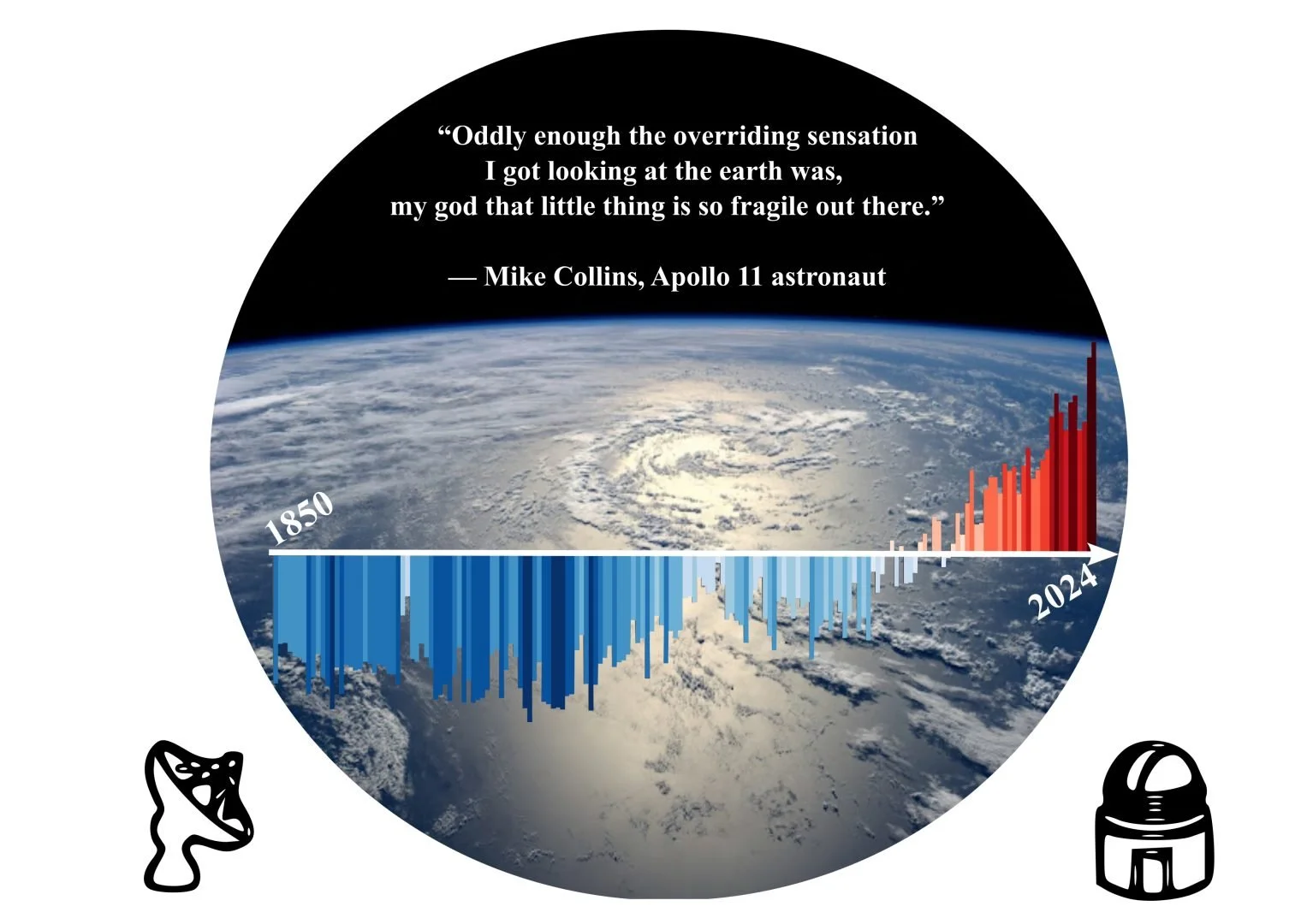
Earth as seen from the ISS, overlaid with global temperature anomalies (colors relative to the 1961–2010 average). Today, global temperatures have risen by 1.2◦C since 1962 – the year ESO was founded – based on HadCRUT5 data. Figure from Fréour et al. 2025.
University of Arizona
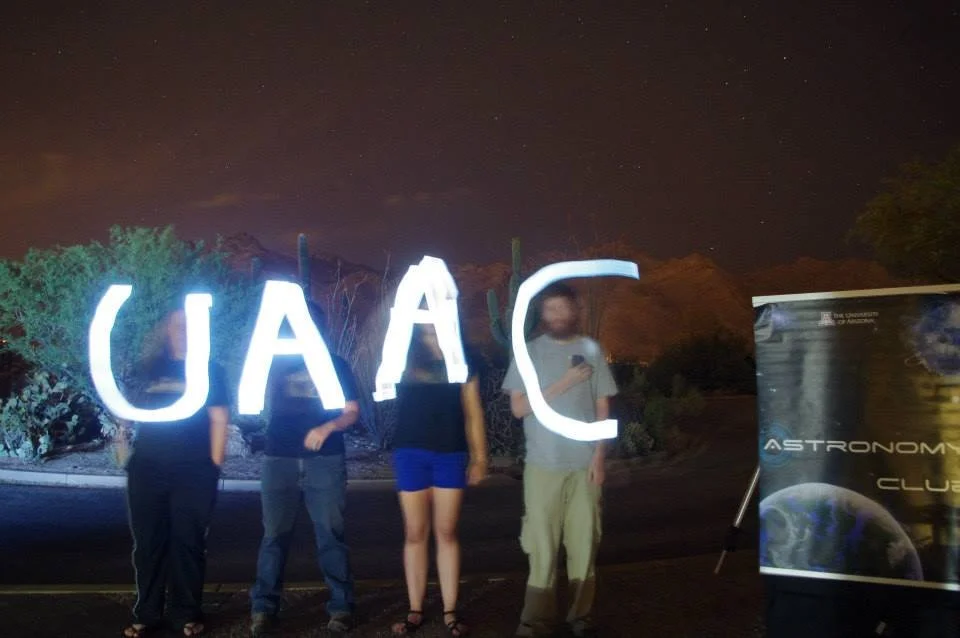
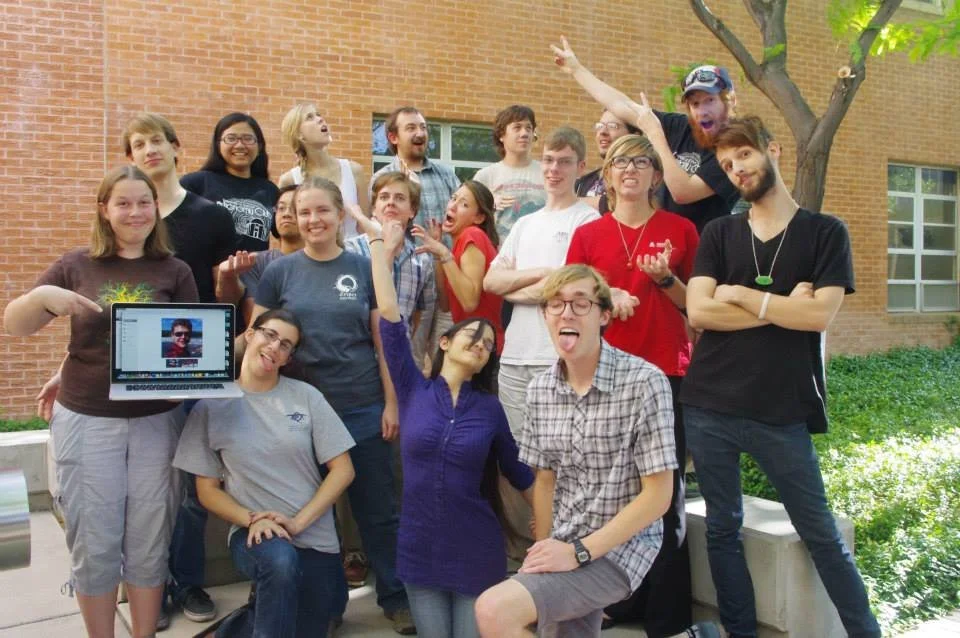
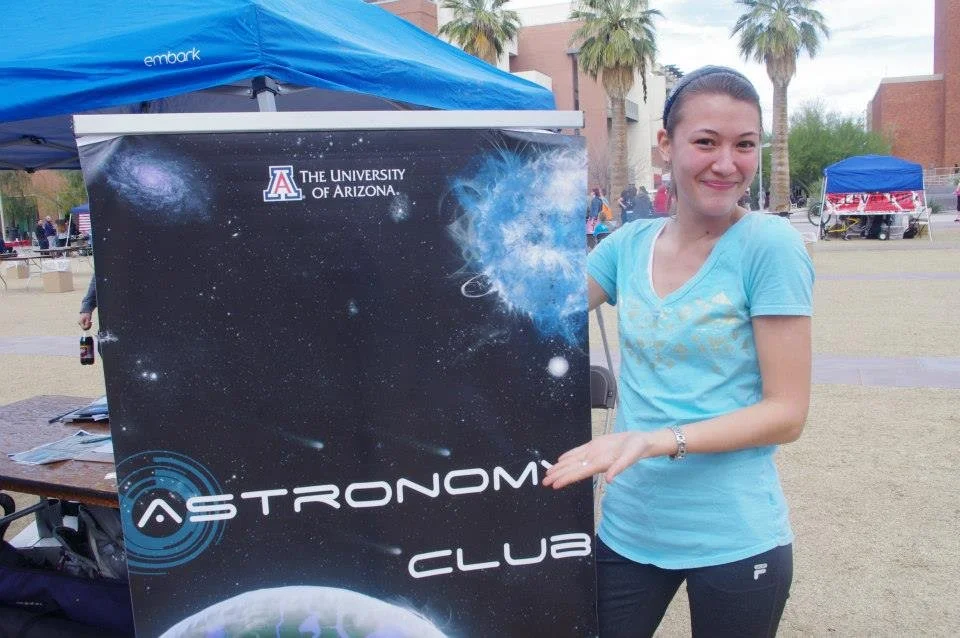
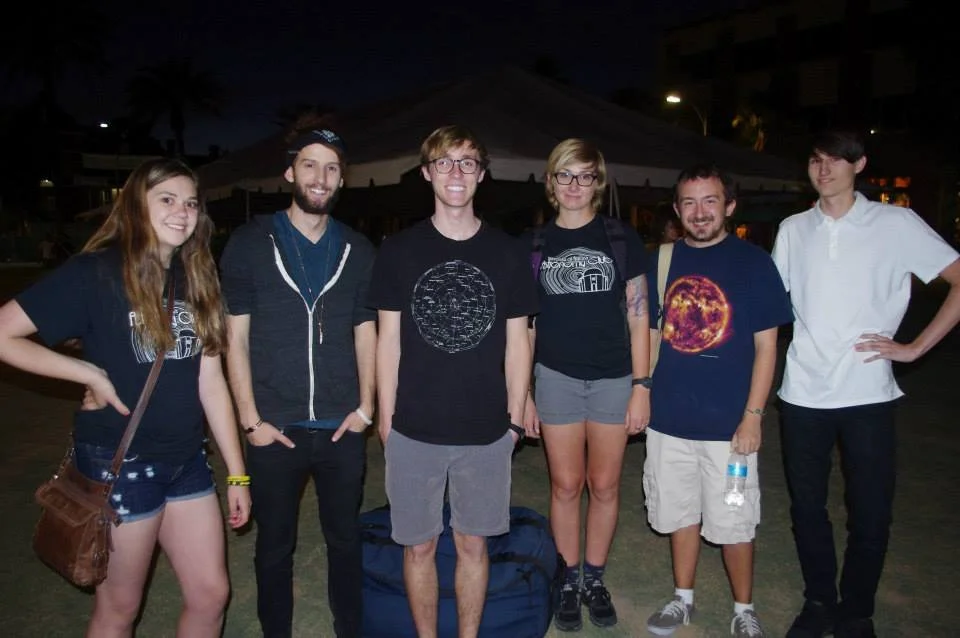
While at the University of Arizona (UofA), I co-founded the University of Arizona Astronomy Club. I was active in the club for 6 years.
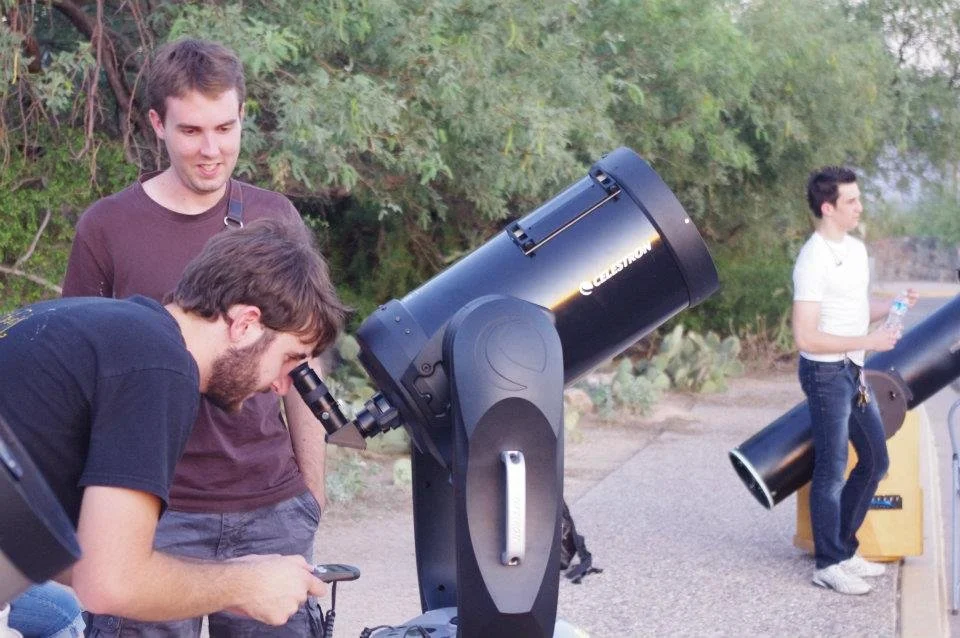
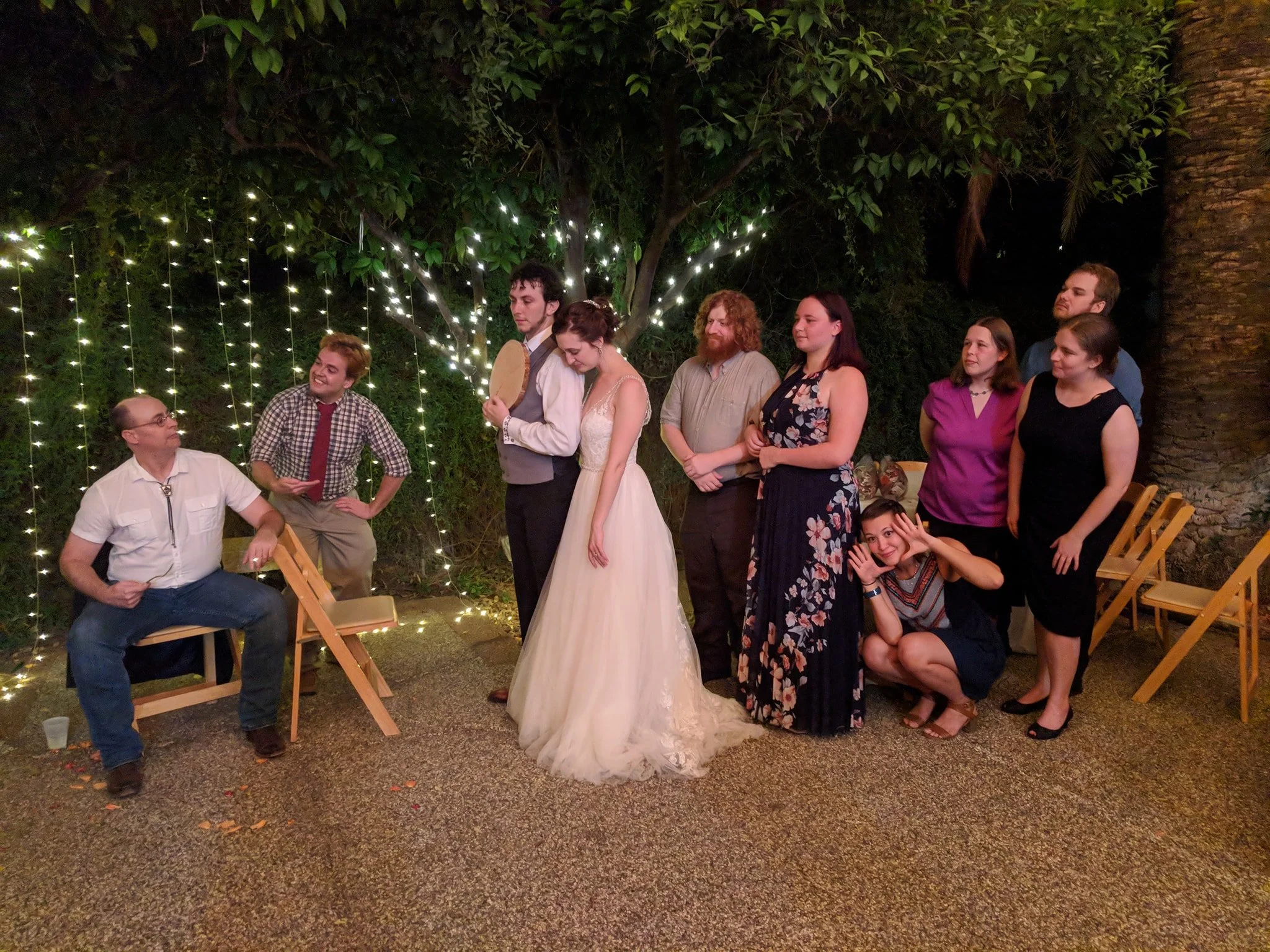
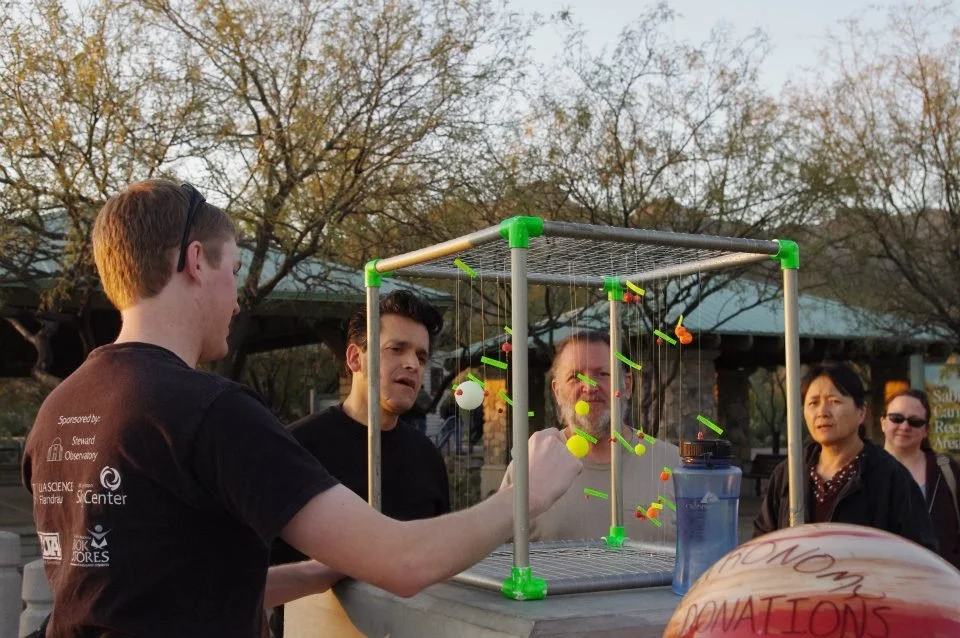
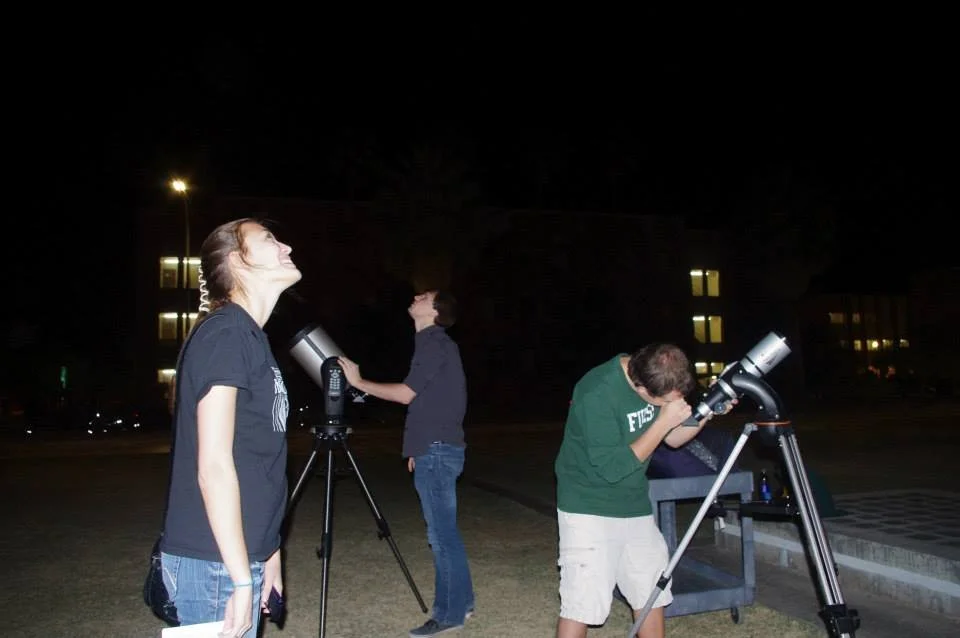
I helped coordinate over a 100 star parties reaching over 10k people on the University of Arizona campus, local astronomical observatories, Sabino Canyon, the Tohono O’odham Nation reservation, university events, and even at a wedding.
Likewise, I helped coordinate over 20 science day events at Earth Day and Science Day at Biosphere II, Arizona Science and Astronomy Expo, Science Day with the Girl Scouts, and local elementary schools.
University of Virginia
Interested in stargazing in Charlottesville, VA?
UVA hosts weekly and semesterly public nights at McCormick Observatory and Fan Mountain, respectively. I was a volunteer at both.
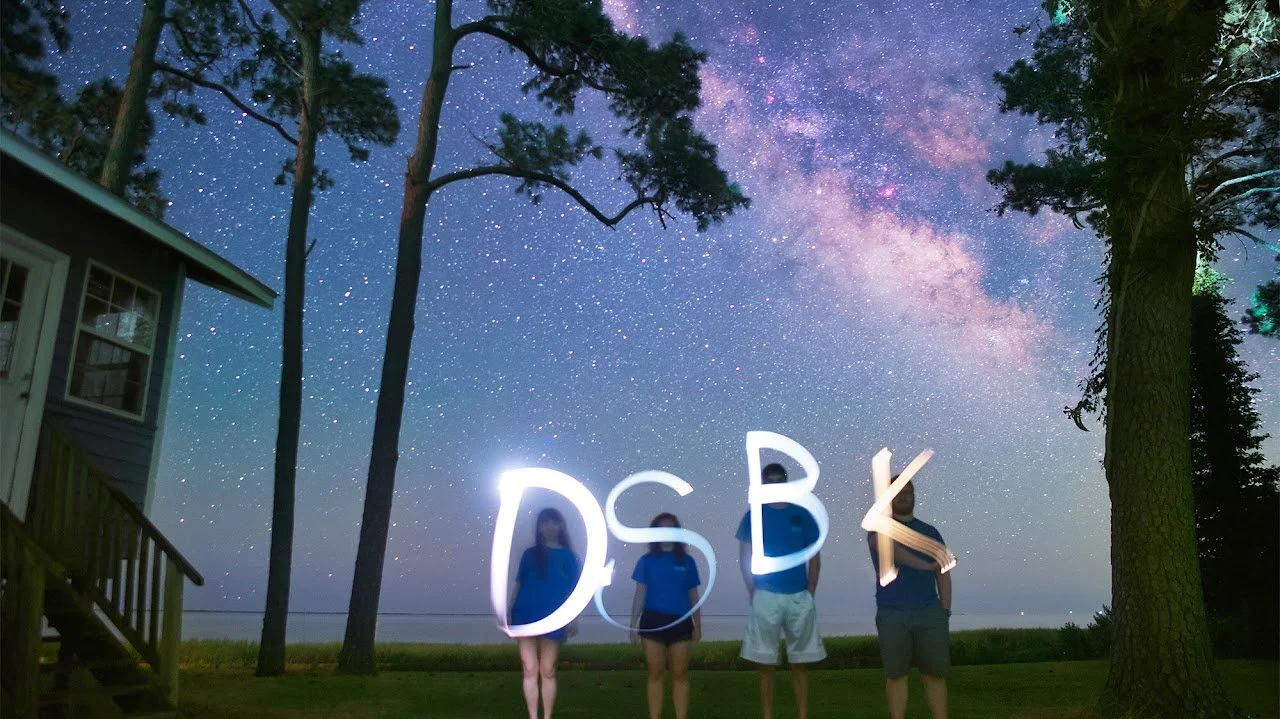
I was also a volunteer for the Dark Skies, Bright Kids (DSBK) program, a semester-long program aimed at enhancing science education in underserved Virginia elementary.